
Product Categorise
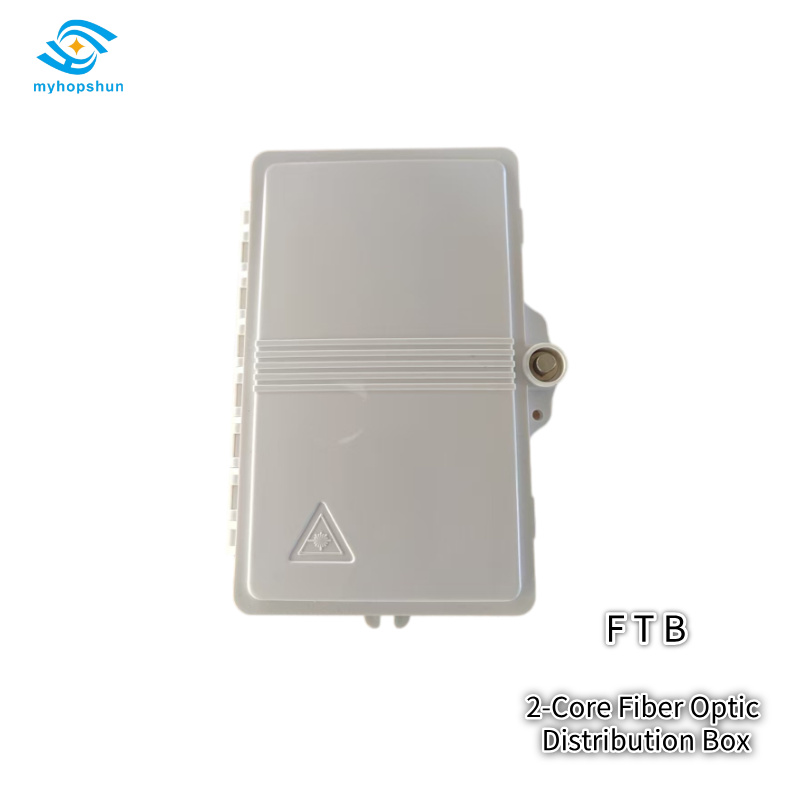
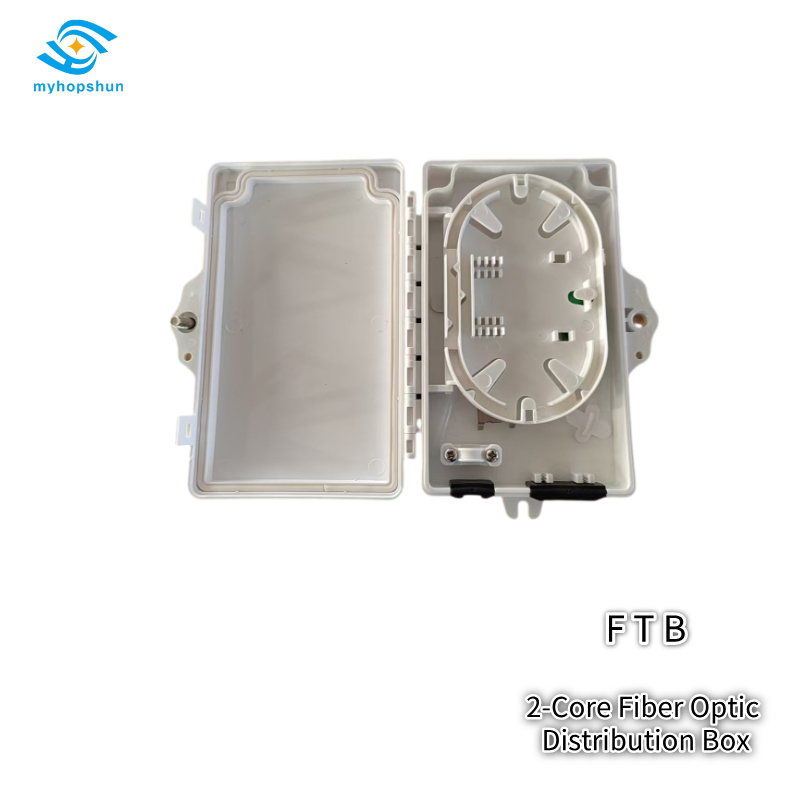
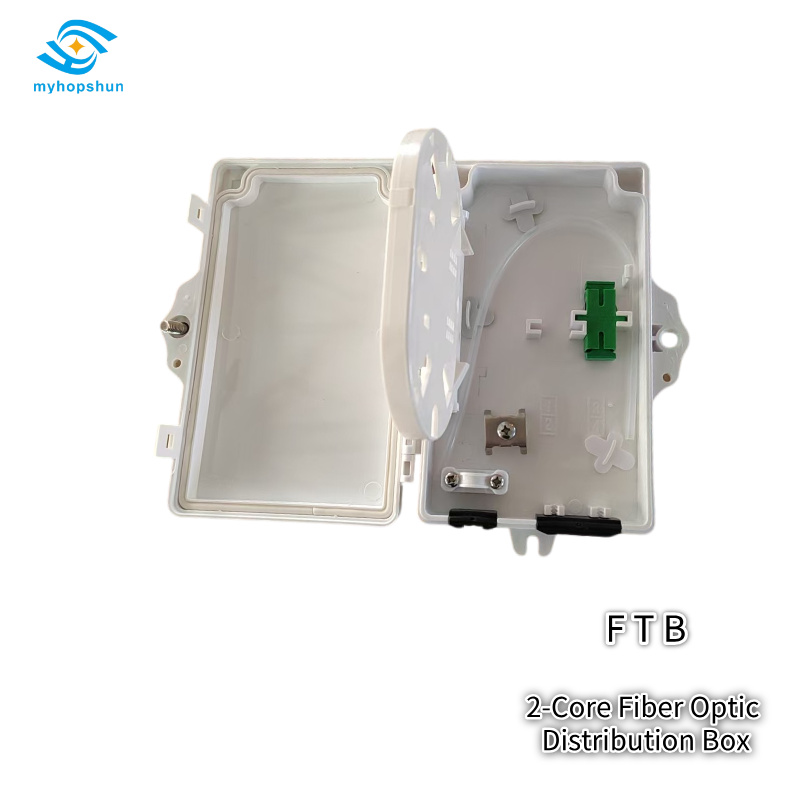
2-Core Fiber Optic Distribution Box ODB
Product Description
I. What scenarios is the DHT002 suitable for?
The DHT002 is best suited for FTTx terminal nodes serving a small number of users, located in dispersed areas, and requiring outdoor protection—such as:
FTTH terminal access in rural, suburban, or low-density residential areas;
Fiber-optic drop connections for villas, detached houses, or small shops;
Video surveillance backhaul and remote equipment connectivity;
Small-scale user connections within campuses, buildings, or small branch networks;
Termination, splicing, or distribution points between feeder cables and drop cables.
It is not suitable for high-density fiber distribution scenarios exceeding two users. If service for more users is required, a fiber distribution box with a capacity of 4, 8, 16, or more cores should be selected.
II. Structure and Materials: Protecting Precision Fiber Optics in Outdoor Environments
The DHT002 2-core fiber connection box is typically constructed from carefully selected, durable materials—such as robust plastic or metal alloys (refer to the specific datasheet for details). This design helps withstand environmental factors like moisture, dust, and temperature fluctuations, minimizing the impact of the external environment on internal fiber connections.
The interior of the box generally includes zones for splicing, adapter/connector mounting, excess fiber storage, and cable entry/exit securing. Proper fiber routing and securing minimize stress, micro-bending, or accidental pulling on the fiber cores, thereby protecting the precision fibers and maintaining connection stability.
III. Functions: Centralized Management of Splicing, Splitting, Distribution, Storage, and Connection
Functionally, the DHT002 serves as a centralized connection point. It provides a secure, organized space for the termination, splicing, or distribution of two fiber-optic cables. Adapters or connectors within the box facilitate precise alignment and secure connection of fiber cores, reducing signal loss and enhancing connection performance.
Enclosing the connection point within a protective housing prevents accidental damage to the precision fiber cores and lowers the risk of signal interference or loss. Additionally, the design allows maintenance personnel to easily open the box and inspect connection status during maintenance or troubleshooting, thereby reducing on-site diagnostic time. IV. Installation and Maintenance Guidelines
To ensure the stable operation of the DHT002 in FTTx networks, please pay attention to the following details during installation and maintenance:
Verify that the outer diameters of the feeder and drop cables match the enclosure’s cable entry/exit ports and sealing components;
Strip cables to the appropriate length to avoid placing excessive stress on the fiber cores;
Reinforce and properly coil fusion splices, ensuring the bend radius complies with fiber installation standards;
Keep connector end-faces clean to prevent signal loss caused by dust or oil contamination;
Apply labels to both ends of incoming/outgoing cables and subscriber ports to facilitate future maintenance;
Seal the enclosure securely to prevent rainwater accumulation or long-term moisture ingress;
Regularly inspect seals, fasteners, the interior for moisture, and the condition of the optical fibers;
When troubleshooting, inspect connector end-faces and adapters first, then check fusion splices.
V. Common Pitfalls
Using a 2-fiber termination box as a high-capacity distribution box;
Ignoring fiber bend radius requirements during installation, leading to micro-bend loss;
Failing to implement drip loops or proper sealing for outdoor installations;
Neglecting to secure the sealing gasket after maintenance, allowing moisture ingress;
Focusing solely on connectors while neglecting fusion splices and fiber slack management.
Avoiding these pitfalls can extend the service life of the DHT002 and reduce the rate of future faults.
VI. FAQ
1. How many subscribers can the DHT002 support?
The DHT002 supports up to 2 subscribers, making it suitable for low-density FTTx terminal access.
2. Can the DHT002 be used outdoors?
It is designed for outdoor environments; however, actual installation must adhere to construction standards regarding sealing, mounting, and waterproofing.
3. Does it integrate optical splitting functionality?
The DHT002 integrates splitting, distribution, splicing, storage, and connection within a protective enclosure; specific configuration regarding splitters and split ratios depends on the actual model and specifications.
4. How can optical signal loss be minimized?
Keep connector end-faces clean, ensure proper fusion splicing, maintain the correct bend radius, securely fasten optical cables, and regularly maintain the integrity of the seals. 5. What are the main items to check during maintenance?
Check the seals, moisture inside the housing, connector end faces, fusion splice points, labels, and fasteners.
| Specification | Details |
Core Industry Attributes |
Fiber Optic Distribution Box |
| Place of Origin | Sichuan, China |
| Brand | myhopshun |
| Application | FTTH/FTTB/FTTx Solution |
| Model | HS 002 |
| Color | White |
| Dimensions (L×W×H) | 186 × 116 × 41 mm |
| Weight | 0.9 kg |
| Material | PC + ABS |
| Max. Connection Capacity | 2 SC / 4 LC / 1 × 1:2 PLC |
| Connector Adapter | SC simplex or LC duplex |
| IP Rating | IP65 |
| Installation Dimensions | 153 × 88 mm |